

Time: 4:30-5:30 p.m.
Date: Wednesday, September 17, 2025
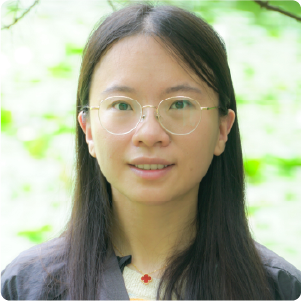
Speaker: Yuchen Wu, Assistant Professor in the School of Operations Research and Information Engineering, Cornell University
Title: Modern Sampling Paradigms: from Posterior Sampling to Generative AI
Abstract: Sampling from a target distribution is a recurring theme in statistics and generative artificial intelligence (AI). In statistics, posterior sampling offers a flexible inferential framework, enabling uncertainty quantification, probabilistic prediction, as well as the estimation of intractable quantities. In generative AI, sampling aims to generate unseen instances that emulate a target population, such as the natural distributions of texts, images, and molecules.
In this talk, I will present my works on designing provably efficient sampling algorithms, addressing challenges in both statistics and generative AI. (1) In the first part, I will focus on posterior sampling for Bayes sparse regression. In general, such posteriors are high-dimensional and contain many modes, making them challenging to sample from. To address this, we develop a novel sampling algorithm based on decomposing the target posterior into a log-concave mixture of simple distributions, reducing sampling from a complex distribution to sampling from a tractable log-concave one. We establish provable guarantees for our method in a challenging regime that was previously intractable. (2) In the second part, I will describe a training-free acceleration method for diffusion models, which are deep generative models that underpin cutting-edge applications such as AlphaFold, DALL-E and Sora. Our approach is simple to implement, wraps around any pre-trained diffusion model, and comes with a provable convergence rate that strengthens prior theoretical results. We demonstrate the effectiveness of our method on several real-world image generation tasks.
Bio: Yuchen Wu is an Assistant Professor in the School of Operations Research and Information Engineering at Cornell University. Prior to Cornell, she was a postdoctoral researcher in the Department of Statistics and Data Science at the Wharton School, University of Pennsylvania. She received her Ph.D. in 2023 from the Department of Statistics at Stanford University, advised by Professor Andrea Montanari. Her research focuses on establishing rigorous foundations for statistical and machine learning methods and developing new algorithms guided by theoretical insights.