

Time: 4:30-5:30 p.m.
Date: Wednesday, October 14, 2026
Location: 350 Computing and Information Science Building
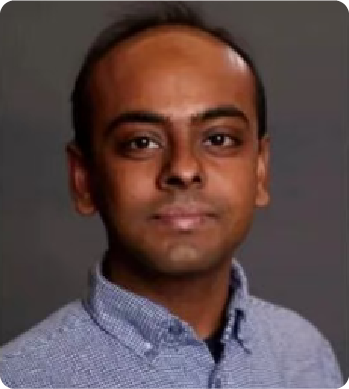
Speaker: Rajarshi Mukherjee, Associate Professor of Biostatistics, Harvard University
Title: Minimax Exponents of Sparse Submatrix Detection and Beyond
Abstract: This talk has two parts. In the first part, we study the exact asymptotics of the minimax risk for detecting an elevated-mean sparse submatrix in a large Gaussian random matrix. Although we have a precise characterization of when and how asymptotic consistency is possible for such testing problems, we still have limited understanding of the exact minimax risk beyond 0-1 behavior. Our results fill this gap for sparse submatrix detection problems. This is a joint work with Subhajit Goswami (Tata Institute of Fundamental Research, Mumbai). In the second part of the talk, we discuss aspects of Lean formalism and Statlib, a verifiable library for mathematical statistics in Lean 4. Specifically, the first part of the talk addresses a problem with a potential information-theoretic and computational gap that makes it difficult to validate theoretical results through numerical simulations. In this regard, we will discuss the promise and challenges of developing an open-source, community-driven Lean 4 library for mathematical statistics to support verification of future theoretical results, as well as the subtleties and philosophies of using AI for autoformalization.
Bio: Mukherjee is an Associate Professor in the Department of Biostatistics at Harvard T.H. Chan School of Public Health. Previously, he was an Assistant Professor in the Division of Biostatistics at UC Berkeley following his time as a Stein Fellow in the Department of Statistics at Stanford University. He obtained his Ph.D. in Biostatistics from Harvard University, advised by Prof. Xihong Lin.
I am generally interested in understanding broad aspects of causal inference in observational studies in modern data settings, with a focus on learning about fundamental challenges in the statistical analysis of environmental mixtures and their effects on the cognitive development of children and cognitive decline in aging populations.