By Louis DiPietro
On


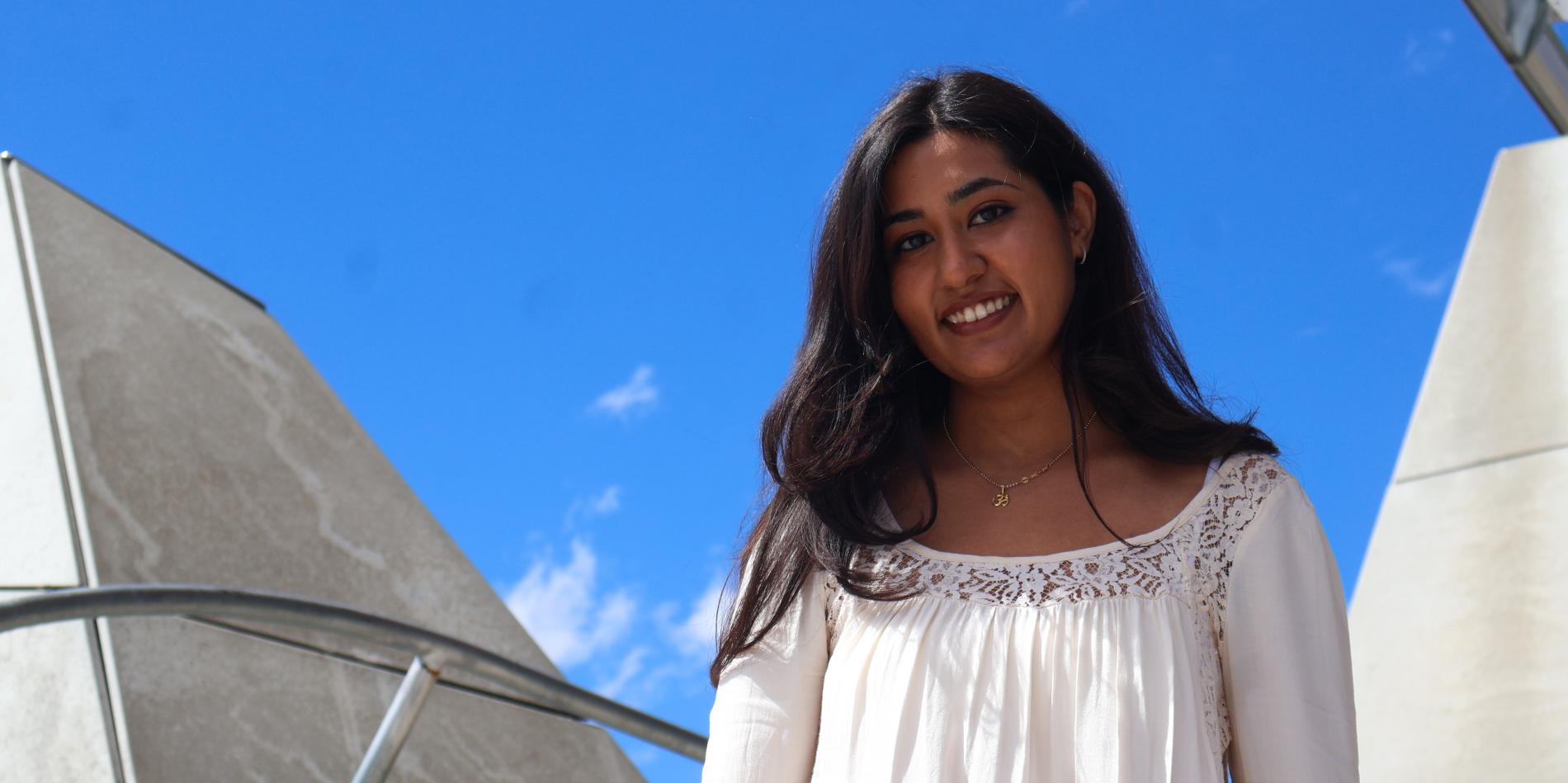
A year into her undergraduate studies on the West Coast, Anisha Tehim ’26 decided to make a change.

She wanted to study computational biology but still have the flexibility to explore different disciplines. She wanted to dive deeper into research, too. Cornell University and, specifically, the Cornell Ann S. Bowers College of Computing and Information Science offered the right mix of specialization and exploration. So, in 2023, the Ridgewood, New Jersey native headed back east and transferred to the Big Red as an incoming sophomore.

In her ensuing three years in Cornell Bowers, Tehim became a budding scholar in precision medicine, a mentor to local students new to computer science, and a research superstar, applying data science methods in research collaborations with Weill Cornell Medicine and the University of Cambridge. After graduating this month, Tehim will begin a master’s degree in computational biology and intends to pursue doctoral studies afterward.  

“I found Cornell’s maxim of ‘Any Person, Any Study’ to be genuinely true,” said Tehim, a biometry and statistics major. “In Bowers, one thing I noticed when I first arrived was how collaborative and hands-on it is. I was always doing hands-on projects for my courses.

“Statistics in general is theory heavy, but Cornell offers so many electives that pair statistics with different disciplines – like business, economics, and even sports analytics,” she said. “You can do that all here at Cornell, which is really cool.”

She cites her advisor, Martin Wells, the Charles A. Alexander Professor of Statistical Sciences, as the most influential figure during her time at Cornell. 

“Dr. Wells was always available and willing to point me in the right direction,” she said. “He was someone I could talk to specifically about my research interests, and anytime there was any research opportunity, he was the first to email me.”

Bridging theory and application for real-world impact.
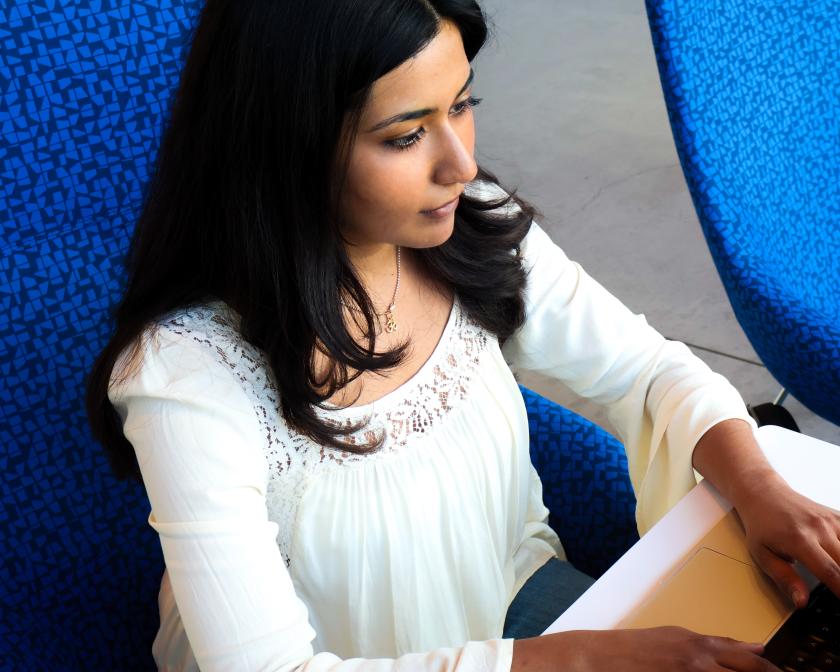
a young female student with tan skin and long black hair sits on a blue chair while typing on a laptop

In Bowers, one thing I noticed when I first arrived was how collaborative and hands-on it is. I was always doing hands-on projects for my courses...you get both theoretical knowledge and applied knowledge, which makes you well-rounded enough to apply AI to any discipline.

Anisha Tehim ’26
Biometry and Statistics

One of those opportunities involved working as an undergraduate researcher during her sophomore year under Ekta Khurana, associate professor in the Department of Physiology and Biophysics at Weill Cornell Medicine. Tehim conducted single-cell RNA sequencing analysis on tumors from Castration Resistant Prostate Cancer (CRPC), which doesn’t respond to traditional hormone therapy. Using statistical methods, she investigated the cellular interactions that drive tumor growth and immune evasion. 

Last summer, she interned with a research team at the University of Cambridge, using statistical methods to more safely match people with blood disorders like sickle cell and thalassemia with the right blood types for transfusions. That work has continued during her senior year.

She cited these two research initiatives as her proudest accomplishments at Cornell. Her two Honorable Mentions for the Computing Research Association’s (CRA) Outstanding Undergraduate Research Award in 2025 and 2026 are highlights, too, she said.  

“The research I’ve done wouldn’t have been possible without all the support and resources at Cornell, from Dr. Wells and Weill Cornell to the graduate students, who were always willing to help and who made such a difference in my learning,” she said. 

Her favorite Cornell memory will be Sundays spent in Mann Library with local middle- and high-school students in Girls Who Code, a program run by Women in Computing at Cornell (WICC) to teach and encourage budding programmers. As a WICC member, Tehim was involved with Girls Who Code throughout her Cornell tenure, beginning as a volunteer assistant, then teaching the program for three semesters, and finally in an administrative role. She sat in on her last Girls Who Code meet-up on Sunday, May 3.

“I’ve known some of these kids now for three years. Some started off really shy, and then became more confident,” she said. “I feel like I’ve learned so much from them.” 

On the threshold of an artificial intelligence (AI)-informed future, Tehim feels ready. Cornell Bowers pushes students to understand the underpinnings of how AI systems work, not merely how to use AI tools, she said.

“In Bowers, you get both theoretical knowledge and applied knowledge, which makes you well-rounded enough to apply AI to any discipline,” she said.

One word to sum up her Bowers education? “Exciting.”


Louis DiPietro is a writer for the Cornell Ann S. Bowers College of Computing and Information Science. 

Photography by Zoe Ku '27, Digital Content Producer