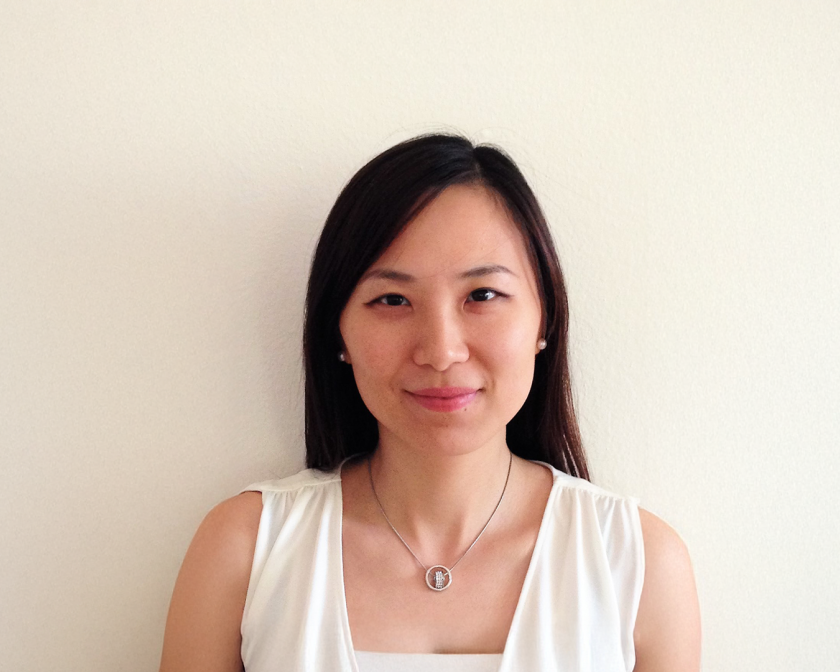
Based in Los Angeles, Shen leads a team of data scientists specializing in marketing science, applying data science and analytics to help leading retail, technology, and media companies shape their marketing strategies.
It’s the kind of data-driven consulting career she first envisioned during an undergraduate internship at Bain & Company. A medical student at the time, Shen discovered a passion for business and consulting. But rather than pursue an MBA, a traditional route into consulting, she wanted to build on her strengths in mathematics and data.
“I wanted to anchor this interest in consulting with my personality, my love of math and data,” she said. “My background is more on the technical, applied side.”
She found that opportunity in Cornell’s MPS in Applied Statistics program.
“This program taught me exactly what I wanted. It was also forward-looking,” she said. “Fifteen years ago, I was already learning about neural networks, text mining and tokenization — all topics that have since become increasingly relevant. The program emphasizes applied statistics over theory, equipping us with strong coding skills and exposure to a broad range of statistical applications. Those skills helped me adapt and advance throughout my career.”
The program’s flexible curriculum was another draw. Shen explored Cornell’s extensive course offerings, taking business classes and a course in data-driven marketing that helped shape her career at McKinsey.
After graduating, Shen spent two years at a Boston-based consulting firm before joining McKinsey in 2011 as a junior specialist focused on data visualization. She advanced through roles as a specialist and analytics expert before becoming a senior expert in 2020, a position she describes as equivalent to associate partner.
Throughout her career, Shen has witnessed significant changes in the tools and technologies used in data science. She views the rise of artificial intelligence as the latest chapter in that evolution, rather than a departure from the field’s statistical foundations.
As AI-assisted programming, sometimes called “vibe coding,” becomes more prevalent, Shen sees a potential challenge: Those who rely on AI-generated code without a strong technical foundation may struggle to evaluate its accuracy and reliability.
“Know your fundamentals,” she said. “Then you can challenge AI and evaluate its work.”
For aspiring data scientists, Shen emphasizes the importance of continuous learning and developing expertise beyond statistics alone. In a field where tools and methods evolve quickly, she believes professionals must remain curious, adaptable, and willing to broaden their skills.
“Even if you are in the MPS program, you must think about how to become a full-stack professional — someone who understands not only data science but also areas like data engineering, data architecture, software engineering, AI risks and business,” she said. “The MPS is only one year. You must keep learning.”